Crypto AI infrastructure budget
Building onchain AI agents requires hardware that can handle sustained compute loads without overheating or failing mid-inference. The budget fit isn't just about the sticker price; it is about the tradeoff between raw performance, thermal efficiency, and longevity. A $300 GPU might seem like a deal, but if it throttles after two hours of training, you are paying more in wasted electricity and lost time than you saved on the hardware.
Start by defining your compute ceiling. Are you running local inference for private agents, or do you need distributed training across a cluster? For single-node setups, consumer-grade GPUs like the NVIDIA RTX 4090 offer the best price-to-performance ratio for most AI infrastructure tasks. They provide sufficient VRAM (24GB) to handle most current LLM quantizations without the enterprise premium of an A100 or H100.
However, power draw is the hidden cost. A high-end GPU can pull 450W under load. If you are running multiple agents, your electricity bill will dwarf the hardware cost. Look for systems with efficient cooling solutions and high-wattage PSUs that have 80 Plus Gold or Platinum ratings. Inefficiency here compounds quickly, turning a budget build into an expensive liability.
Finally, consider the resale value and upgrade path. AI moves fast. Hardware that is cutting-edge today may be obsolete in 18 months. Buying modular systems that allow you to swap out GPUs or add storage later protects your initial investment. Avoid proprietary, non-upgradeable all-in-one boxes unless you have a very specific, short-term use case. Your budget should stretch across the lifecycle of the project, not just the first month of operation.


As an Amazon Associate, we may earn from qualifying purchases.
Shortlist real options
Choosing the right crypto AI infrastructure requires looking past the hype cycle to identify projects with actual utility. The market has shifted from abstract concepts to tangible layers for compute, storage, and agent coordination. We are evaluating the strongest candidates based on their current market position and technical focus.
The top contenders represent different approaches to decentralizing AI. Bittensor (TAO) focuses on a decentralized machine learning network where miners earn rewards for training models. Render Network (RNDR) provides the essential GPU compute power needed for rendering and AI training. Artificial Superintelligence Alliance (FET), which recently merged with Fetch.ai and Ocean Protocol, aims to create a unified ecosystem for autonomous AI agents.
For those seeking infrastructure rather than just tokens, Kite AI and 0G (ZeroGravity) offer specialized solutions. Kite AI focuses on decentralized data validation and curation, while 0G builds decentralized storage and data availability layers specifically optimized for AI workloads. These projects address the bottleneck of data access and processing speed.
The following table compares these leading options based on their primary function and market focus. This comparison helps clarify which infrastructure layer aligns with specific use cases, from raw compute to agent coordination.
| Project | Primary Focus | Infrastructure Type |
|---|---|---|
| Bittensor (TAO) | Decentralized ML Training | Compute/Network |
| Render Network (RNDR) | GPU Compute Power | Compute |
| ASI Alliance (FET) | Autonomous Agents | Agent Framework |
| 0G (ZeroGravity) | Data Storage & Availability | Storage/Data |
| Kite AI | Data Validation & Curation | Data/Verification |
When selecting an infrastructure project, consider whether you need raw compute power (Render), a network for model training (Bittensor), or a framework for deploying agents (ASI). The #1 crypto for the AI world is often debated, but infrastructure plays the foundational role that enables all other applications to function efficiently.
Inspect the expensive parts
Building onchain AI agents is cheap; keeping them from bleeding funds is the hard part. Most failures in crypto AI infrastructure happen at the intersection of autonomous execution and immutable smart contracts. You need a practical inspection checklist to catch these expensive failure points before they cost you.

AI agents rely on real-world data to make trading or governance decisions. If your oracle feeds are stale or manipulated, the agent acts on bad information. Check the update frequency, the source diversity, and whether the data pipeline has a fallback mechanism for chain outages. A single stale price feed can trigger a liquidation cascade.

Give your agent a wallet with strict caps. Never let an autonomous agent control your entire treasury. Implement multi-signature requirements for large transactions and set daily spending limits. This ensures that if the model hallucinates or gets trapped in a loop, the damage is contained to a manageable amount.
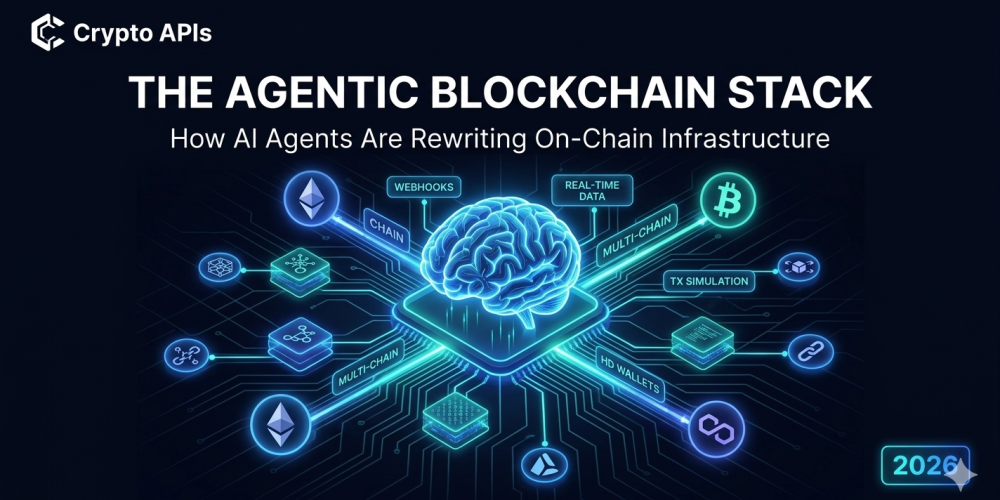
Onchain interactions are public. Anyone can send a transaction to your agent’s address with a hidden instruction in the data field. Test your system against prompt injection attacks where malicious users try to override the agent’s core directives. Your system must distinguish between legitimate user input and adversarial manipulation.
AI inference is computationally heavy, and onchain execution is expensive. Ensure your agent can estimate gas costs accurately before submitting transactions. If gas spikes, the agent should pause or switch to a cheaper layer rather than executing a loss-making trade. Run cost simulations under network congestion to avoid eating your margins.


As an Amazon Associate, we may earn from qualifying purchases.
Plan for ownership costs
Buying an AI node is the easy part. The real expense starts when you account for the ongoing costs of keeping it online and relevant. Many operators underestimate how quickly hardware depreciates and how much electricity and maintenance eat into margins. A cheap buy stops being cheap the moment you factor in the total cost of ownership over a 24-month period.
The hidden costs of running AI nodes
Hardware is only the first line item. You must budget for high-speed storage, which degrades faster under constant AI workloads, and for electricity, which can vary wildly by region. Maintenance surprises include replacing failed GPUs, upgrading cooling systems, and paying for technical support if you lack deep sysadmin skills. Ignoring these costs leads to unexpected downtime and lost revenue.
When a cheap buy stops being cheap
Low upfront cost often means higher long-term expense. Cheaper hardware may consume more power per teraflop or require more frequent replacements. For example, a budget GPU might cost half as much as a professional card but use twice the electricity and fail after six months of heavy AI training. Always calculate the cost per compute unit over the expected lifespan, not just the sticker price.
Key ownership cost factors
- Electricity: AI nodes are power-hungry. Research local rates and consider renewable energy options to stabilize costs.
- Storage: Fast NVMe drives are essential for data throughput but wear out faster than standard HDDs.
- Cooling: Proper ventilation prevents hardware throttling and extends component life, adding to setup complexity.
- Software: Licensing fees for AI frameworks or monitoring tools can add up, especially for commercial operations.


As an Amazon Associate, we may earn from qualifying purchases.
Crypto ai infrastructure: what to check next
Decentralized AI infrastructure is shifting from experimental concepts to active networks that handle compute, data, and agent coordination. As the market matures, investors and developers need clear answers about which projects actually deliver utility versus those relying on hype.
Below are the most common practical questions about the current landscape of crypto AI infrastructure.
No comments yet. Be the first to share your thoughts!