Why crypto powers AI agents
The gap between artificial intelligence and blockchain is closing fast, but for now, crypto offers something AI models fundamentally lack: native financial autonomy. Current AI agents operate in a vacuum, unable to execute transactions or purchase resources without human intervention. Blockchain changes this by providing a trustless settlement layer where code can pay code. This isn't just about speculation; it's about building the operational backbone for autonomous agents that need to buy compute, pay for data, or settle contracts instantly.
Centralized payment processors are too slow and restrictive for high-frequency agent interactions. An AI agent managing a fleet of drones or negotiating API access needs to move value in milliseconds, not days. Crypto infrastructure provides the liquidity and speed required for this economy. It allows agents to hold wallets, sign transactions, and interact with decentralized markets without relying on a bank's approval process.
This shift is creating a new category of infrastructure tools designed specifically for agent-ready economies. Projects are emerging that focus on machine-to-machine (M2M) payments, decentralized data markets, and verifiable compute. These tools solve the "last mile" problem of AI, enabling models to act independently in the real world.
The current trajectory suggests crypto won't just be an add-on for AI; it's becoming the only native financial infrastructure that agents can actually use without asking a bank for permission.
As we look at the best tools for 2026, the focus is on infrastructure that supports this autonomous financial layer. From decentralized compute networks to agent-specific wallets, these are the building blocks for the next generation of AI applications.
Top decentralized compute networks
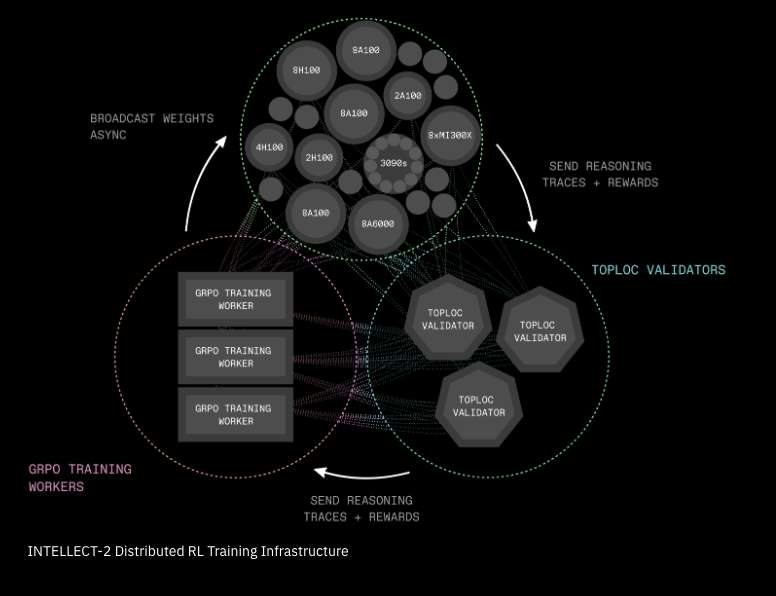
The bottleneck for AI isn't just data; it's the sheer amount of GPU power required to train and run models. Centralized cloud providers are expensive and often have long waitlists. Decentralized compute networks solve this by aggregating idle GPU power from thousands of individual nodes into a unified, scalable pool. Think of it as the "Airbnb for GPUs": instead of building your own data center, you rent compute from anyone who has a powerful graphics card sitting in their garage or server room.
This model drives costs down significantly compared to AWS or Azure, while providing the massive parallel processing power needed for large language model (LLM) training. For developers building the next generation of AI agents, these networks are the backbone that makes scaling affordable.
Render Network (RNDR)
Render Network is arguably the most established player in decentralized GPU rendering and compute. Originally built for 3D rendering, it has pivoted to become a primary infrastructure layer for AI workloads. It uses a Proof-of-Work style consensus where node operators prove they have completed tasks. RNDR is widely used for AI inference and training tasks, offering a reliable, battle-tested network that many AI startups integrate directly into their stacks.
Akash Network (AKT)
Akash Network operates as a decentralized cloud marketplace, often described as the "open-source AWS." It allows users to lease unused computing resources, including high-end GPUs, from providers around the world. Akash is particularly favored by developers for its flexibility and cost-efficiency, often offering prices 40-80% lower than centralized competitors. It supports a wide range of containerized workloads, making it a versatile choice for running AI models and inference servers.
io.net
io.net focuses specifically on bridging the gap between Web2 and Web3 compute. It aggregates GPU power from various sources, including enterprise data centers and individual contributors, to create a unified pool for AI training and inference. io.net has gained traction for its ease of integration, allowing developers to spin up GPU instances with a few lines of code, similar to using standard cloud APIs but with a decentralized backend.
Bittensor (TAO)
Bittensor takes a different approach by creating a decentralized machine learning network. Instead of just renting raw GPU power, Bittensor incentivizes the creation and sharing of AI models and data. Subnets on the network specialize in different tasks, from natural language processing to image generation. It’s less about "renting a GPU" and more about participating in a distributed intelligence ecosystem where the network itself improves as more miners contribute.
| Project | Primary Focus | Pricing/Consensus |
|---|---|---|
| Render Network | AI Training & Inference | Proof-of-Work |
| Akash Network | General Compute Marketplace | Bid-based Auction |
| io.net | Unified GPU Pool | Marketplace Aggregation |
| Bittensor | Decentralized ML Models | Subnet Incentives |
Hardware for AI Node Operators
Running a node in the crypto AI space requires more than just a powerful consumer graphics card. You are essentially renting out compute power, and the hardware needs to balance raw throughput with thermal stability and power efficiency. The market has shifted from simple mining rigs to specialized AI inference nodes, meaning your choice of GPU and server chassis directly impacts your daily earnings and uptime reliability.
Graphics Processing Units
The GPU is the engine of your operation. For most node operators, NVIDIA’s RTX 4090 remains the gold standard for consumer-grade inference due to its high memory bandwidth and efficiency. However, if you are scaling up, you will want to look at workstation-grade cards like the NVIDIA RTX 6000 Ada Generation. These offer the VRAM needed for larger language models without the thermal throttling issues common in dense consumer setups.
When shopping for GPUs, prioritize models with robust cooling solutions. AI workloads run at 100% capacity for extended periods, so a card that throttles after an hour will significantly drag down your effective hashrate. Avoid used enterprise cards unless you have a dedicated datacenter environment, as their power consumption and noise levels are often impractical for home or small-office setups.
Server Chassis and Power
Your server chassis must accommodate the airflow requirements of high-performance GPUs. A standard desktop case will not suffice for multi-GPU setups. Look for server-grade chassis with high-static-pressure fans and dedicated GPU support brackets to prevent sagging under heavy loads.
Power delivery is equally critical. Ensure your power supply unit (PSU) has enough headroom—aim for 80 Plus Titanium efficiency ratings to minimize heat and electricity waste. For those running multiple high-end GPUs, a dedicated rack-mounted power distribution unit (PDU) can help manage load balancing and prevent circuit overloads.
Recommended Hardware
Below are specific hardware components frequently used by node operators. These items are selected for their reliability and performance in sustained compute environments.



As an Amazon Associate, we may earn from qualifying purchases.
Decentralized storage for AI datasets
AI models are hungry for data, but training them on centralized servers creates bottlenecks and single points of failure. Decentralized storage layers solve this by distributing large datasets across a global network of nodes. This architecture ensures that the massive files required for machine learning—videos, high-resolution images, and complex training sets—are available, redundant, and secure.
Projects like Filecoin and Arweave have become foundational for crypto AI infrastructure. They provide the persistent storage needed to archive historical data, which is critical for training models that need to reference past trends or unchangeable records. Instead of relying on AWS or Google Cloud, AI developers are increasingly turning to these networks to reduce costs and increase data sovereignty.
The synergy between AI and decentralized storage is growing as datasets expand. When an AI model needs to verify the integrity of its training data, blockchain-based storage offers cryptographic proof of existence and immutability. This transparency is becoming a standard requirement for enterprise-grade AI applications.


As an Amazon Associate, we may earn from qualifying purchases.
While decentralized networks handle the heavy lifting in the cloud, local infrastructure still plays a role in data preprocessing. Many AI workflows involve moving raw data from decentralized storage to local high-speed drives for initial cleaning and formatting before training begins. Having reliable local storage ensures that the transition between decentralized and centralized processing is smooth and efficient.
How to evaluate AI infrastructure projects
Assessing crypto AI infrastructure requires looking past the hype to the underlying technical reality. You are evaluating whether a project can actually deliver compute or data at scale, not just promise it. Start with the code and the team.
Check if the core protocol is open-source. Projects with transparent codebases on GitHub allow the community to audit security and scalability claims. If the code is private or heavily restricted, proceed with extreme caution.

Look for founders and lead engineers with proven experience in both distributed systems and machine learning. Vague resumes or anonymous teams are red flags. Credible projects often highlight past successes in high-scale tech environments.

Do not rely on whitepaper promises. Look for active testnets, deployed mainnet services, or partnerships with established tech firms. Real adoption is the strongest indicator of long-term viability in this sector.
For those building the physical layer of this infrastructure, hardware selection is critical. Reliable compute nodes require robust components to handle intensive workloads.


As an Amazon Associate, we may earn from qualifying purchases.
Frequently asked questions about crypto AI
Which crypto projects are integrating with AI?
The intersection of artificial intelligence and blockchain is moving from theory to actual deployment. Projects like Render Network and Akash Network are leading the charge by providing decentralized GPU computing power, which is essential for training and running large AI models. Meanwhile, protocols such as Fetch.ai and Ocean Protocol are focusing on AI agents and data marketplaces, allowing autonomous bots to interact with the blockchain for tasks like trading or data verification. This infrastructure allows AI agents to operate without relying on traditional banking systems, creating a native financial layer for autonomous software.
What are the top AI infrastructure companies driving this sector?
The AI infrastructure market is dominated by a few high-valuation players that provide the underlying compute and software layers. OpenAI currently leads the market with a valuation around $300 billion, followed closely by xAI at $200 billion and Anthropic at $183 billion. Specialized infrastructure providers like CoreWeave and Databricks are also scaling rapidly to meet the demand for GPU clusters. These companies form the backbone of the AI industry, and their partnerships with crypto projects often determine which blockchain networks become the preferred choice for decentralized AI workloads.
Do I need specific hardware to run AI crypto tools?
While many AI crypto tools run on cloud servers, having local hardware can be beneficial for running lightweight models or participating in decentralized compute networks. For those looking to build a local setup, an Amazon product grid of high-performance GPUs and compatible cooling systems is often the best starting point. Ensure your hardware meets the memory requirements of the specific AI models you intend to run, as this is often the biggest bottleneck for individual users.


As an Amazon Associate, we may earn from qualifying purchases.
No comments yet. Be the first to share your thoughts!