Crypto ai strategy limits to account for
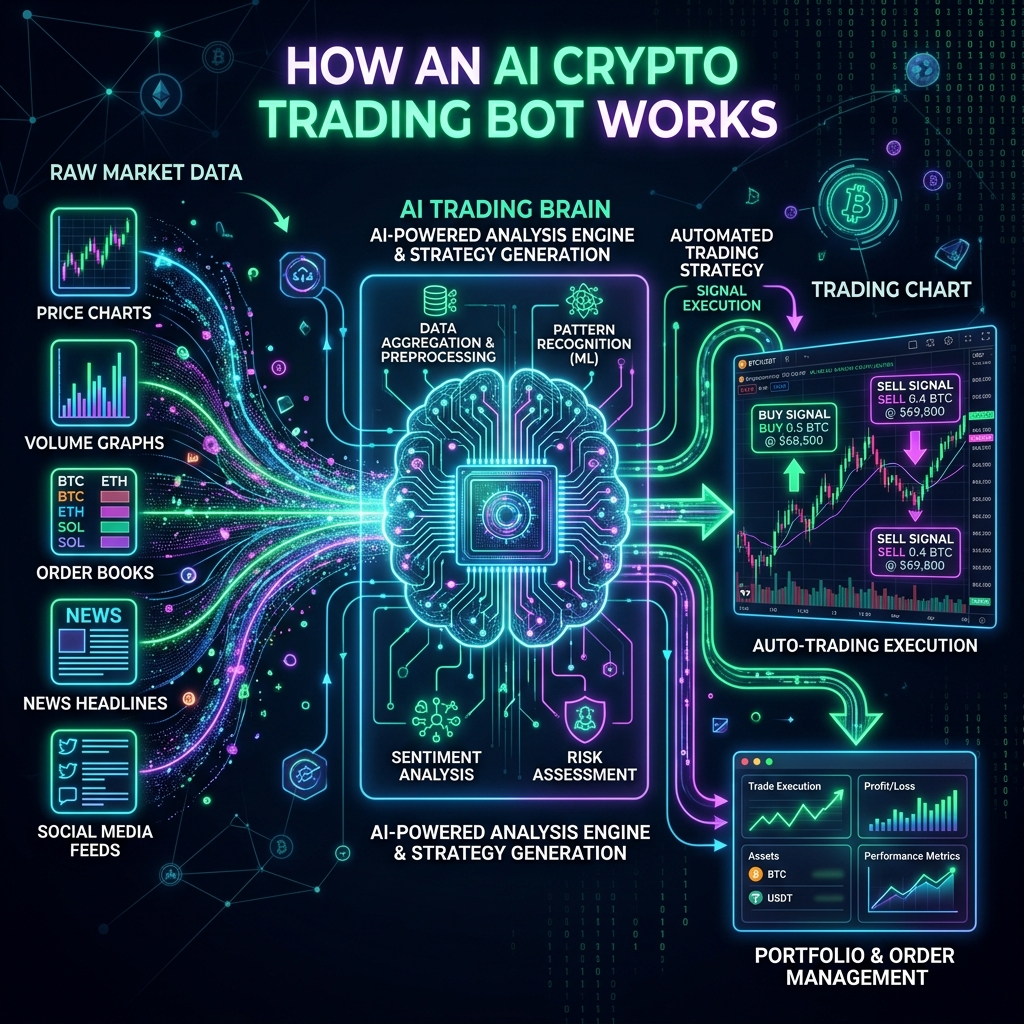
Building a crypto AI strategy requires navigating a landscape where infrastructure is often fragmented. The primary constraint isn't just access to data, but the reliability of the tools that process it. Most traders face a choice between building custom models or adopting platform-based automation, each with distinct trade-offs regarding control and cost.
No-Code Platforms for Immediate Deployment
For those without engineering resources, no-code platforms offer a viable entry point. Services like Cryptohopper allow users to automate trading strategies without writing Python scripts. These tools provide pre-built AI modules and copy-trading features, reducing the technical barrier to entry. However, this convenience comes with limited customization, meaning you are bound by the platform's logic and data sources.
Custom Infrastructure for Precision
Advanced users often prefer building custom infrastructure using open-source libraries. This approach offers full control over data pipelines and model architecture, allowing for highly specific strategy implementation. The trade-off is significant: it requires substantial time, expertise, and ongoing maintenance. Without robust error-handling and data validation, custom solutions can fail silently during high-volatility periods.
Data Quality and Latency
Regardless of the tool chosen, data quality remains the critical bottleneck. AI models are only as good as the data they ingest. Latency issues in fetching on-chain data or order book updates can render even the most sophisticated strategies ineffective. Ensuring low-latency data feeds is not optional; it is the foundation of any sustainable yield strategy in crypto markets.
Crypto ai strategy choices that change the plan
Building a sustainable yield strategy with AI requires balancing automation, cost, and control. The market offers distinct approaches, each with specific tradeoffs regarding complexity and capital efficiency. Below, we compare the most viable paths for 2026, from no-code platforms to custom algorithmic systems.
| Strategy Model | Control Level | Typical Cost | Primary Risk |
|---|---|---|---|
| No-Code AI Platforms | Low | Subscription ($50–$100/mo) | Black-box logic, limited customization |
| Cloud-Based Bots | Medium | Tiered ($20–$200/mo) | Platform dependency, exchange API limits |
| Custom Python Scripts | High | Dev time + server costs | Technical debt, debugging complexity |
| Hybrid Signal Systems | High | Variable (Data feeds + execution) | Latency, signal decay |
No-Code AI Platforms
Tools like Cryptohopper allow traders to deploy AI-driven bots without writing code. These platforms offer drag-and-drop interfaces for setting up dollar-cost averaging (DCA) and trailing stops. While accessible, they often rely on proprietary algorithms that users cannot fully audit. This lack of transparency can be risky during volatile market shifts where pre-programmed logic fails to adapt.
Cloud-Based Trading Bots
Cloud bots provide a middle ground, offering more customization than no-code tools while handling the server infrastructure. They typically connect to major exchanges via API keys, automating execution based on user-defined indicators. The tradeoff here is platform dependency; if the service experiences downtime or changes its pricing structure, your strategy may be interrupted or become unprofitable due to rising fees.
Custom Python and Algorithmic Systems
For maximum control, developers build custom systems using Python libraries like ccxt or pandas. This approach allows for precise risk management and the integration of unique data sources. However, it requires significant technical expertise and ongoing maintenance. A bug in the code can lead to rapid capital loss, making this path suitable only for experienced traders with robust testing environments.
Hybrid Signal Execution
Hybrid systems separate signal generation from execution. AI models analyze market data to generate buy/sell signals, which are then routed to an execution engine. This decoupling allows for better risk isolation. If the AI signal source degrades, the execution logic remains intact. The complexity lies in managing the latency between signal generation and order placement, which can erode profits in fast-moving markets.
Evaluating these tradeoffs helps align your AI strategy with your technical capacity and risk tolerance. Sustainable yield comes not just from the AI’s accuracy, but from the reliability of the infrastructure supporting it.
Build the decision framework
A sustainable yield strategy in crypto AI requires moving beyond hype to a structured evaluation of infrastructure and tools. The goal is not just to find a bot that works today, but to build a system that survives market shifts. This section outlines the practical steps to construct that framework.

Before selecting any software, you must identify where the yield comes from. Is it staking rewards, liquidity provision, or arbitrage? Each source carries different risks. Define your maximum acceptable drawdown and time horizon. This clarity prevents you from chasing high-yield traps that mask underlying volatility.
Look for platforms that offer robust automation without requiring deep coding knowledge. Tools like Cryptohopper allow you to set up trading bots, dollar-cost averaging (DCA), and trailing features on major exchanges. The ability to backtest strategies against historical data is essential for validating your approach before committing capital.

Not all "AI" features are created equal. Determine if the tool uses machine learning to adapt to market conditions or simply follows static indicators. Look for platforms that offer AI-driven signal generation or copy trading options. The best tools provide transparency into how decisions are made, allowing you to audit the logic behind automated trades.

Security is the foundation of any yield strategy. Ensure the platform uses API keys with restricted permissions, never allowing withdrawal rights. Check for two-factor authentication (2FA) and a track record of security audits. Connecting to reputable exchanges reduces counterparty risk, but the tool itself must also be trustworthy.

Never deploy your full portfolio immediately. Start with a small amount of capital to monitor performance over a full market cycle, including both bull and bear phases. Track metrics like win rate, average profit per trade, and maximum drawdown. This real-world testing reveals flaws that backtests often miss.

As an Amazon Associate, we may earn from qualifying purchases.
By following these steps, you create a resilient framework that prioritizes security, transparency, and proven performance. This approach turns abstract AI promises into a concrete, manageable investment strategy.
Common Mistakes in Crypto AI Strategies
The promise of automated yield often masks significant infrastructure risks. Many platforms market "AI-driven" solutions that lack the transparency required for sustainable long-term performance. Evaluating these tools requires distinguishing between genuine algorithmic logic and marketing gloss.
Misleading "No-Code" Claims
Several platforms advertise fully autonomous AI trading that requires no technical knowledge. While convenient, these tools often rely on static, pre-set templates rather than adaptive machine learning. Without access to the underlying code or logic, you cannot verify how the system reacts to black-swan events or market shifts. This opacity creates a false sense of security.
Weak Option: Static Bot Templates
Many "AI bots" are simply rigid rule-based systems that cannot learn from new data. They may perform well in trending markets but fail during volatility spikes. True infrastructure should offer adaptive parameters, not just fixed entry and exit points. Relying on static templates can lead to rapid drawdowns when market conditions change.
The Infrastructure Gap
Sustainable yield depends on robust backend infrastructure, not just user-friendly interfaces. Check if the platform provides clear API documentation, real-time data feeds, and audit trails. Vague descriptions of "proprietary algorithms" are a red flag. Without verifiable infrastructure, you are betting on a black box.
Crypto ai strategy: what to check next
Before committing capital to automated trading, it helps to separate marketing hype from operational reality. The following answers address the most common practical objections regarding cost, control, and performance expectations in 2026.
These questions highlight that the technology is a tool for execution and pattern recognition, not a guaranteed profit machine. Your role shifts from manual trader to strategy manager, focusing on risk controls and regular performance audits rather than clicking buy and sell buttons.
No comments yet. Be the first to share your thoughts!