Crypto ai infrastructure budget
Building a crypto AI infrastructure stack requires balancing upfront hardware costs against ongoing operational expenses. You are not just buying a GPU; you are purchasing a node that must remain profitable against rising electricity and maintenance costs. A realistic budget accounts for the depreciation of specialized hardware, which can lose significant value within two years as newer, more efficient models enter the market.
For those starting small, consumer-grade GPUs offer a lower barrier to entry but struggle with the memory bandwidth required for large language model inference. Professional solutions like the NVIDIA H100 or A100 provide the necessary throughput but demand significant capital and cooling infrastructure. The tradeoff is clear: higher initial investment yields better per-token inference costs, which is critical when operating at scale.


As an Amazon Associate, we may earn from qualifying purchases.
When allocating funds, prioritize memory capacity over raw compute speed for most AI agent tasks. Insufficient VRAM forces the system to offload data to slower system RAM, creating a bottleneck that negates the value of expensive GPUs. Additionally, factor in the cost of redundant power supplies and high-quality cooling solutions, as these components determine the lifespan of your investment in a high-stakes environment.
Shortlist real options
Crypto AI infrastructure is shifting from speculative tokens to functional layers that handle data, compute, and agent payments. The market is consolidating around projects that solve specific bottlenecks: decentralized storage, GPU rental, and autonomous transaction routing.
We have shortlisted four options that currently define the next cycle. These selections are based on current market capitalization, active developer engagement, and real-world utility rather than hype. Each project serves a distinct layer of the AI stack, allowing for targeted allocation based on risk tolerance and technical conviction.
Kite AI: Agent Payment Infrastructure
Kite AI focuses on enabling autonomous AI agents to transact on-chain. As crypto companies pivot toward building agents as the next wave of users, Kite provides the payment rails necessary for these agents to operate without human intervention. This is critical infrastructure for the "agentic economy" where bots handle micro-transactions and service contracts.
0G (ZeroGravity): Decentralized Data Availability
0G addresses the data bottleneck for AI models. By providing a decentralized data availability layer, it allows AI applications to store and retrieve large datasets efficiently and cheaply. This is essential for training models and verifying AI outputs on-chain, making it a foundational piece of infrastructure for other AI projects.
Nous Research / Surf: Open-Source Model Development
Nous Research contributes to the open-source AI ecosystem through its Surf project. By developing and refining open-source language models, they provide an alternative to closed corporate AI. This supports the crypto AI narrative of democratizing access to powerful AI tools, which is a key driver for community adoption and token utility.
AIOS: Integrated Operating System
AIOS positions itself as an operating system for AI agents. It integrates various AI tools and services into a single platform, allowing developers to build and deploy agents with ease. This simplifies the development process and lowers the barrier to entry for creating complex AI-driven applications on blockchain networks.
| Project | Core Focus | Risk Profile | Current Status |
|---|---|---|---|
| Kite AI | Agent Payments | High | Active Development |
| 0G | Data Availability | Medium | Mainnet Live |
| Nous Research | Open Source Models | Medium | Active Research |
| AIOS | Agent OS | High | Beta Testing |
These options represent the most robust infrastructure plays available today. They are not guaranteed winners, but they are the most likely to survive and thrive in the evolving crypto AI landscape. Always verify current market data and conduct your own due diligence before investing.
Inspect the expensive parts
Crypto AI infrastructure projects are burning capital at an unprecedented rate. Before you allocate capital, you need to understand where the money actually goes. This section breaks down the four most expensive failure points in the current market. Use this checklist to audit the underlying mechanics of any AI crypto project.

AI models require massive amounts of data and processing power. Projects that promise efficient AI without transparent compute sourcing are often hiding unsustainable burn rates. Look for on-chain proof of GPU utilization and verify that data ingestion costs are covered by real usage, not token inflation.
Many AI crypto projects struggle with a misalignment between token utility and actual service demand. If the token is primarily used for speculation rather than paying for inference or data storage, the project will fail when the hype cycle ends. Check if the token is required for every transaction or if it is merely a governance token with no real-world economic sink.

Technology alone is not enough. The most successful infrastructure plays will have enterprise or developer adoption. Look for partnerships with established tech firms, active GitHub repositories, and clear pathways to revenue. Projects that rely solely on community hype without tangible product-market fit are high-risk investments.
As the regulatory landscape tightens, projects that ignore compliance will face significant headwinds. Ensure the project has a clear legal structure and is prepared for increasing scrutiny from bodies like the SEC. Non-compliant projects risk being shut down or delisted from major exchanges, which can wipe out value overnight.
By focusing on these critical areas, you can avoid the most common pitfalls in the crypto AI space. Always prioritize projects with transparent economics and real-world utility over those with flashy marketing.
Plan for ownership costs
Buying the hardware is the easy part. The real expense comes from the electricity, cooling, and maintenance required to keep AI crypto infrastructure running. A cheap GPU rig can become a money pit if it cannot handle the thermal load of continuous inference or if the power bill exceeds the potential rewards.
Electricity and cooling
AI workloads, especially those involving large language models or agent-based trading, demand consistent high-performance computing. This means your hardware will run at 100% capacity for long periods. You must calculate the cost per kilowatt-hour in your region. In areas with high energy prices, the profit margin on staking or running nodes can vanish quickly. Adequate cooling is not optional; overheating leads to throttling, reduced efficiency, and premature hardware failure.
Maintenance surprises
Hardware does not last forever, and AI infrastructure is particularly hard on components. GPUs and TPUs degrade under constant heat and voltage stress. You should budget for replacing fans, thermal paste, and eventually the accelerators themselves. Software updates are also frequent in the AI crypto space. A new model release might require a driver update that breaks compatibility with your current setup, leading to downtime and lost revenue.
The hidden costs of "cheap" buys
A lower upfront cost often means higher long-term ownership costs. Entry-level consumer GPUs may lack the memory bandwidth or ECC (Error Correcting Code) needed for stable, long-running AI tasks. They may also lack the necessary connectivity (like NVLink) to scale efficiently. When you factor in the time spent troubleshooting, the higher electricity usage of inefficient chips, and the faster replacement cycle, the "budget" option often costs more over two years than a professional-grade asset.


As an Amazon Associate, we may earn from qualifying purchases.
When to walk away
If you cannot afford professional cooling or reliable, high-efficiency power supplies, the infrastructure may not be viable for you. The goal is not just to buy the tool, but to own it sustainably. If the operational expenses (OpEx) consistently eat into your capital expenditure (CapEx) savings, it is time to reconsider your strategy or look into managed cloud solutions, even if they have higher hourly rates, as they transfer the maintenance burden to the provider.
Crypto ai infrastructure: what to check next
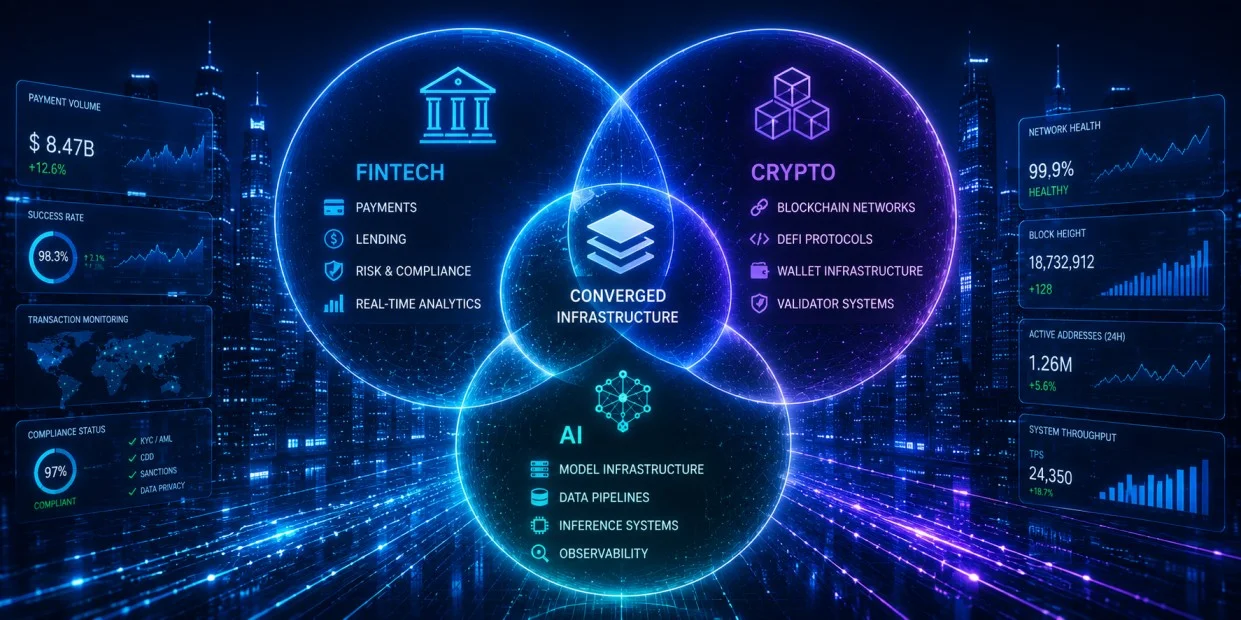
Before committing capital to the intersection of artificial intelligence and blockchain, it helps to separate marketing hype from functional utility. The market is shifting from speculative tokens to actual infrastructure, meaning the best projects are those providing compute, data, or agent payment rails.
The infrastructure era is arriving, with AI agents poised to reshape demand for crypto services. As companies build a second growth engine by turning agents into the next wave of users, the focus shifts to which tokens actually support this new economic model.
No comments yet. Be the first to share your thoughts!