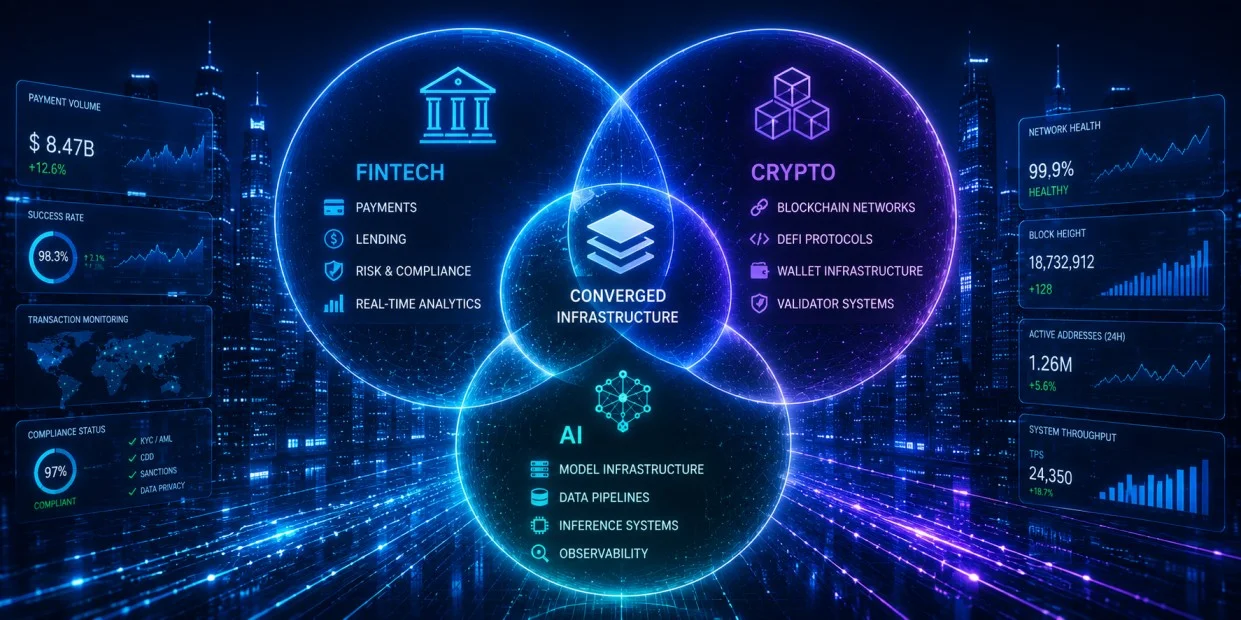
What defines crypto ai infrastructure
Crypto AI infrastructure isn't just one thing. It's the backbone that lets artificial intelligence run without relying on a single corporate server farm. Think of it as the difference between renting a room in a hotel and owning your own house with a private power grid. You get control, privacy, and often lower costs, but you also have to manage the wiring yourself.
This space splits into two main buckets. The first is decentralized compute. This is the heavy lifting—renting out GPU power for machine learning models across a distributed network of nodes. Projects in this layer handle the raw processing power needed to train and run AI. The second bucket covers onchain application tools. These are the protocols that let AI agents interact with blockchains, manage data, or execute transactions autonomously.
The goal is to merge blockchain’s trustless nature with AI’s computational needs. This allows for open, scalable, and sovereign data handling. Instead of your data being locked in a walled garden, it can be used to train models in a permissionless environment. This shift is creating a new market for tools that bridge the gap between code and capital.
As we look at the tools that power this ecosystem, it helps to keep this distinction in mind. Some tools provide the raw horsepower, while others provide the connective tissue. Both are essential, but they serve different roles in the stack. The following sections break down the specific products that are leading each category.
Top decentralized compute networks
AI models do not run on thin air; they require massive amounts of GPU power. Decentralized compute networks solve the hardware bottleneck by pooling闲置 graphics cards from around the world. These networks offer a cheaper, more scalable alternative to centralized cloud providers like AWS or Google Cloud for training large language models and running inference.
Think of these networks as the Airbnb of computing power. Instead of buying expensive hardware, developers rent GPU cycles from individuals or data centers. This approach democratizes access to high-performance computing while keeping costs down for the projects building the next generation of AI agents.
How they work
The process begins with a developer submitting a compute job—such as rendering a 3D scene or training a neural network—to the network. The protocol splits the task into smaller chunks and distributes them across nodes that have the required GPU specifications. Once the work is verified by the network consensus mechanism, the developer receives the result and pays the node operators in the platform’s native token.
Key players
Several networks have emerged as leaders in this space. Render Network (RNDR) focuses on GPU rendering for graphics and AI. Akash Network (AKT) provides a general-purpose decentralized cloud for various compute needs. Bittensor (TAO) creates a marketplace for machine intelligence, allowing miners to earn rewards for contributing to the network’s collective intelligence.
Comparison of top networks
| Network | Primary Use Case | Token | Key Feature |
|---|---|---|---|
| Render Network | GPU Rendering & AI | RNDR | Specialized for graphics and AI workloads |
| Akash Network | General Compute | AKT | Open-source, flexible cloud marketplace |
| Bittensor | AI Model Training | TAO | Decentralized intelligence network |
These platforms are essential infrastructure for the crypto AI ecosystem. As demand for AI computing grows, these networks will likely become more critical to the development of decentralized AI applications.


As an Amazon Associate, we may earn from qualifying purchases.
Leading onchain ai tools and agents
The application layer of crypto AI infrastructure has moved beyond simple data indexing. We are now seeing tools that allow AI agents to operate directly on-chain, executing trades and managing data without constant human intervention. This shift turns passive blockchain networks into active environments where autonomous code can interact with financial primitives.
Projects like Virtuals Protocol are leading this charge by providing the infrastructure for AI agents to own assets and interact with smart contracts. Meanwhile, platforms like Bittensor are creating decentralized networks where AI models are trained and served by a distributed community of miners, reducing reliance on centralized cloud providers. These tools are not just theoretical; they are actively being used to automate strategies and manage complex data sets across multiple chains.
The focus is increasingly on interoperability and data integrity. AI agents need reliable, tamper-proof data to make decisions. Oracles and decentralized storage solutions are becoming critical components of this stack, ensuring that the information feeding these agents is accurate and accessible. As the technology matures, we will likely see more specialized tools emerging for specific use cases, from automated market making to decentralized research.
For those looking to build or invest in this space, understanding the underlying hardware and software requirements is essential. The following resources offer insights into the development and investment landscape.


As an Amazon Associate, we may earn from qualifying purchases.
How to evaluate ai infrastructure projects
Evaluating crypto AI infrastructure requires looking past the marketing hype to the actual technical architecture. Many projects use "AI" as a buzzword without offering real computational value. You need a framework that separates genuine infrastructure from tokenized vaporware.
Start by verifying the technical claims against primary sources. Look for whitepapers or technical documentation that detail consensus mechanisms, GPU distribution, and data handling. A recent review in arXiv highlights how many AI-token projects lack true decentralization in their AI training processes [src-serp-6]. If the code isn't open or the architecture is vague, treat it with extreme skepticism.
Check the health of the developer ecosystem. Active GitHub repositories, regular commits, and a transparent roadmap are better indicators of longevity than a promising pitch deck. You should also assess the tokenomics. Does the token have a clear utility in paying for compute or data, or is it purely speculative? Avoid projects where the token supply is heavily concentrated among insiders.
Finally, look for real-world adoption. Are there active users or developers building on the protocol? Infrastructure is only valuable if it is being used. Look for partnerships with established tech firms or integrations with major AI models. If the project has no tangible users, it is likely just another experiment waiting to fail.
Read the whitepaper and technical docs. Check if the consensus mechanism and GPU distribution are clearly defined. Look for open-source code on GitHub to verify claims of decentralization and transparency.

Review GitHub commit history and issue resolution. Active development with regular updates and a responsive community indicates a healthy project. Avoid projects with stagnant repositories or vague roadmaps.

Ensure the token has a clear use case, such as paying for compute or data. Check for vesting schedules and supply distribution to avoid projects with high insider concentration that could lead to dumps.
Look for active users, developers, and partnerships. Infrastructure is only valuable if it is being used. Prioritize projects with tangible integrations and real-world applications over those with only theoretical promise.
Frequently asked questions about AI infrastructure
What is crypto infrastructure? Crypto infrastructure provides the foundational technology that allows the digital asset ecosystem to function. This includes blockchain networks (Layer-1 and Layer-2), custody solutions, payment rails, oracle networks, and development platforms. In the context of AI, it also encompasses the decentralized compute power and data layers that support machine learning tasks.
What are the top AI crypto projects? Current market leaders include Bittensor (TAO) for decentralized AI training, Render (RNDR) for GPU rendering power, and the Artificial Superintelligence Alliance (ASI FET) for autonomous agents. Akash Network (AKT) provides decentralized cloud computing, while Virtuals Protocol (VIRTUAL) focuses on powering on-chain AI agents.
How do AI tokens differ from regular cryptocurrencies? While regular cryptocurrencies primarily serve as digital money or store of value, AI tokens are designed to power specific AI-related projects. These include AI-powered portfolio management, image generation, path finding, and data verification. They often require active participation in the network, such as providing GPU cycles or data, to earn rewards.
No comments yet. Be the first to share your thoughts!